
One Engine for Any Route. No Matter How Complex.
The lowest-cost plan without sacrificing on-time delivery windows—all with the team best suited to the job.
Lowest Cost, Every Promise Kept
The plan that costs the least while keeping every window you promised.
- Mileage optimizationEvery mile in the plan counts toward its cost.
- Driver costDriver cost counts too, and it varies with each driver’s skills.
- On-time, every timeWhen you make a time window commitment, we make sure you keep it.
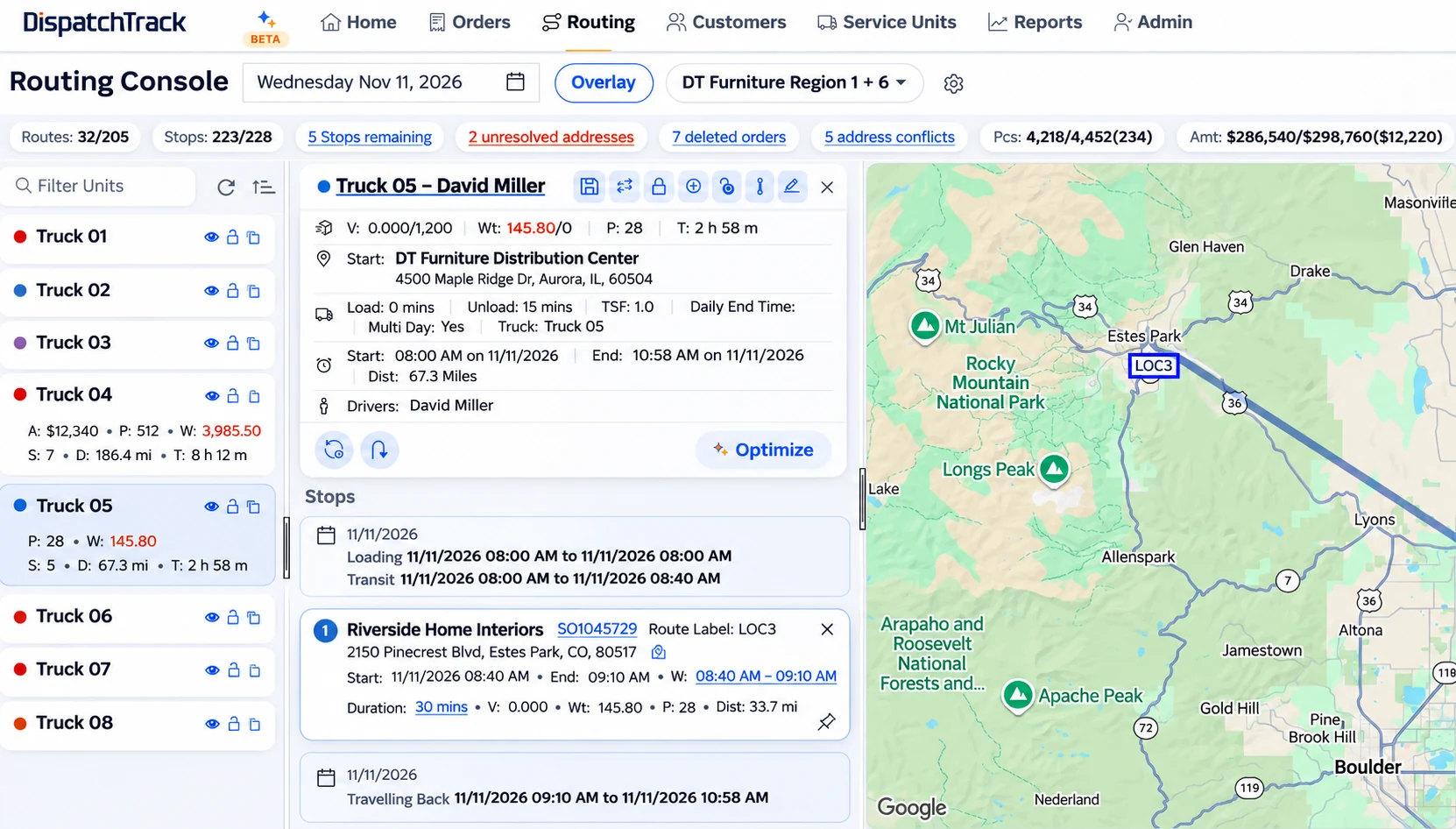
Done Right the First Time
Skill and equipment matching give every job its best chance of going right.
- SkillsMatch each stop to drivers with the skills it takes.
- EquipmentSend the right equipment to the right job.
- PrioritiesPriority orders go first, to the team that’s the best fit for the job.
Your Rules. Codified.
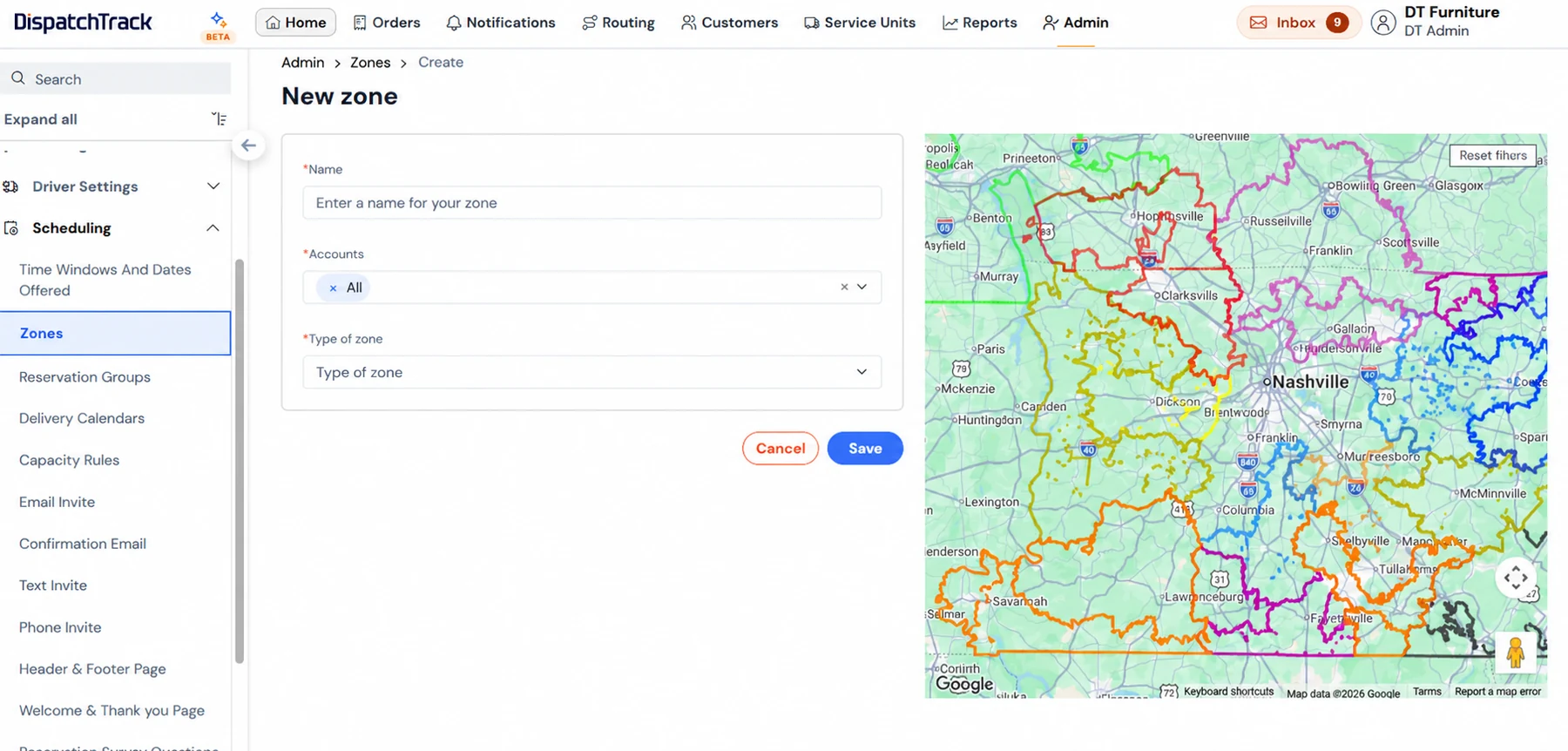
Hazmat, zones, and hours of service, handled when routes are built—not after.
- Hazardous materialsRoute hazmat loads within the rules.
- ZonesPlan by zone, and keep routes out of exclusion zones.
- Hours of servicePlan multi-day routes that stay within DOT hours-of-service rules.
Plans Built for the Real World
Travel, stop, and load times from real traffic and your own history.
- TrafficTraffic slowdowns are built into travel times, in real time.
- Driver paceEach driver’s historical speed shapes their route.
- Stop and load timeDwell time follows the items delivered; load time follows the number of items loaded.
Drag and Drop to Re-plan
Make changes rapidly. Manual adjustments don’t break the engine or the route plan.
- Intuitive UXMove stops and routes in an easy drag-and-drop routing console.
- Lock what’s finalLock a stop’s time window. Lock a whole route once it’s finalized.
- See who’s editingThe console shows when someone else is editing the same route.
The cheapest route on paper is often the most expensive one in practice. A missed window or the wrong team costs more than the miles you saved.
More from our researchBuilt for every kind of delivery
Furniture, appliances, building supplies, food and beverage, uniform and linen, healthcare supplies, groceries, parcels, same-day, on-demand, and hot food.
Two-person teams, install skills, and the windows you promised.
See how3PL & final-mile carriersEvery client’s orders, every delivery type, one plan.
See howB2B distributionFood, beverage, uniform and linen, and healthcare routes optimized for complex constraints.
See howBuilding suppliesThe right truck, equipment, and driver for every job site.
See howWhat operations ask about routing.
What does DispatchTrack route optimization solve for?
The lowest total cost, counting mileage and driver cost, which varies with skill. Every promised time window and constraint is kept, and skills and equipment are matched so each job has the best chance of being done right the first time.
How is this different from the optimizer we use today?
One engine plans every kind of route you run: scheduled, same-day, on-demand, recurring, high-volume parcel, and multi-day. Skills, equipment, windows, hazmat, zones, and hours of service are built into the plan, and travel and stop times come from real traffic and your own history.
What constraints can DispatchTrack route optimization handle?
Driver skills, equipment, custom time windows, priorities, hazardous materials, exclusion zones, and zone-based routing, and DOT hours-of-service rules on multi-day routes.
How does it predict how long each route will take?
Traffic slowdowns are built into travel times. Each driver’s historical speed is used. Time at each stop depends on the items delivered, and load time on the number of items loaded.
Can it plan deliveries that span several days?
Yes: projects with many stops over several days, and multi-day routes that stay within hours-of-service rules.
Can dispatchers change routes by hand?
Yes. Dispatchers move stops and routes in a drag-and-drop routing console. They can lock a stop’s time window or a whole finalized route, and the console shows when someone else is editing the same route.
How do I lower last-mile delivery costs?
Plan for the lowest total cost, not the shortest route. DispatchTrack counts mileage and driver cost together while keeping every promised window, so fewer deliveries fail and fewer trucks go out. Customers typically drive 10–20% fewer miles, and S. Bertram now sees each route’s cost while it’s being planned, so changes are made with the numbers in view. Read the case study: S. Bertram Inc.
How do I improve on-time delivery rates?
Build routes from real travel and stop times, and keep the windows you promise. DispatchTrack plans with real traffic, each driver’s pace, and time at each stop. Gunton Corporation delivers 85% of orders on time within a 30-minute window, and SiteOne reports 98% accurate ETAs. Read the case study: Gunton Corporation (Pella Windows)
How do I reduce fuel costs for my delivery fleet?
Drive fewer miles for the same deliveries. DispatchTrack builds denser routes that count every mile toward the plan’s cost and plan around traffic slowdowns. Customers typically drive 10–20% fewer miles, and Appliance Parts Distributors fit 50% more stops on each truck. Read the case study: Appliance Parts Distributors (APD)
Can DispatchTrack route a mixed fleet of specialized vehicles?
Yes. Each job is matched to a truck with the right equipment and a driver with the right skills, so the flatbed, boom truck, or box truck that can do the job is the one that gets it. Ferguson Enterprises routes a mixed fleet of its own trucks and contractors across every customer schedule and location. Read the case study: Ferguson Enterprises
What is the best route optimization software for delivery fleets?
One that plans every kind of route you run with your real constraints built in. DispatchTrack plans scheduled, same-day, on-demand, recurring, and multi-day routes in one engine, with skills, equipment, windows, hazmat, and hours of service built into the plan. Customers typically drive 10–20% fewer miles, SiteOne reports 98% accurate ETAs, and Arey Jones Educational Solutions optimizes routes 65% faster. Read the case study: Arey Jones Educational Solutions
How does DispatchTrack reduce driver labor cost per stop?
By fitting more productive stops into each driver’s day. Stop times are predicted from the items being delivered, routes are built for density, and each job goes to a driver with the right skills. Appliance Parts Distributors went from 10 to 15 stops per truck. Read the case study: Appliance Parts Distributors (APD)
What is DispatchTrack Routing and Communications?
Route optimization and customer communication working from the same plan. Routes are built with 98% ETA accuracy and typically 10–20% fewer miles, and customers get automated updates, live ETAs, and two-way messaging based on those routes. ProMed Supplies replaced spreadsheet routing and one-by-one confirmation calls with optimized routes and automated delivery confirmations. Read the case study: ProMed Supplies
Built to Optimize Your Hardest Routes.
Bring us the routing needs that make life hardest for your teams. We’ll show you how DispatchTrack solves it.