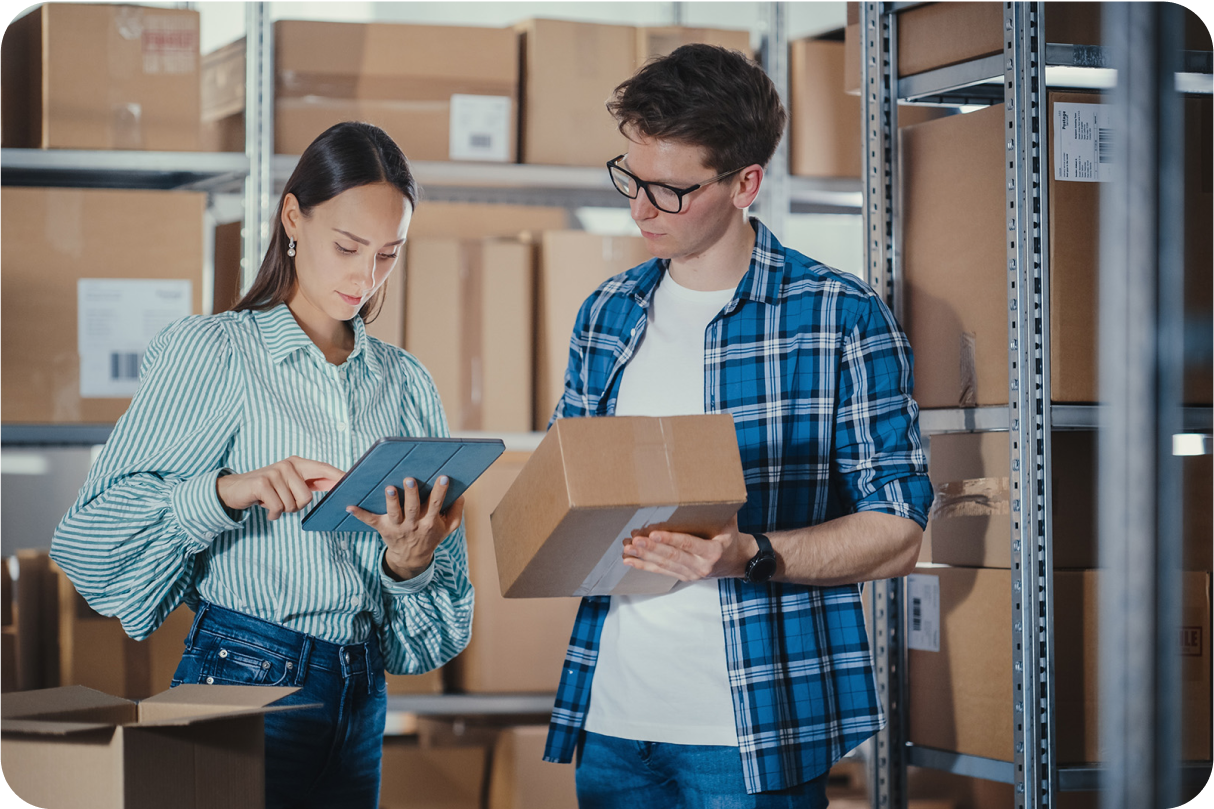
In North America, buy online pickup in store (BOPIS) represents about 10% of all fulfillment—but it’s an option offered by more than 85% of retailers. In Australia, the percentage of retail sales that are fulfilled via store pickup is now over 50%. Obviously, you can’t really make an apples to apples comparison between the two markets, but if you’re a North American retailer you might be looking at that number and wondering how much room for growth there could be in fulfillment via pickup.
For most businesses, there’s a huge amount of potential there. If you have warehouses and stores that are close to population centers, on-site customer pickups are an option that many of your customers will appreciate—whether that’s contractors pickup up pallets of building supplies or consumers picking up small furniture items and bulk food orders. Not only that, but it represents a lower cost fulfillment option for your operations.
No fuel costs. No driver hours. Just a little coordination and some staging.
But here’s the rub: BOPIS still needs to be optimized in order to work for your teams and your customers. Without the right processes in place, you risk alienating customers with long wait times, parking lot traffic jams, and inconsistent service.
Simply put, if you can streamline store and warehouse pickup logistics in the same way that logistics leaders streamline last mile logistics, you can improve customer experience in a more cost-effective way.
Here’s a guide to doing precisely that:
How Does BOPIS Fit into Last Mile Logistics?
Before we dive into the step-by-step guide to actually optimizing this process, let’s contextualize BOPIS within the larger logistics landscape. It’s easy to imagine that once you’ve got the middle mile transfer to the warehouse or retail location sorted out, customer pickups can essentially be an afterthought.
Unfortunately, the reality is a little more nuanced than that. Yes, you need to know when the relevant product will be available for pickup—but availability isn’t just a matter of having something in the back of the warehouse gathering dust. It’s about having the customer’s entire order picked and staged, and having an associate who’s available to bring the order out to the customer and capture proof of pickup.
Timing is everything here, and a huge amount of the timing aspect comes down to keeping store/warehouse associates and customers in the loop throughout the process. You need to be able to let customers know when to arrive on site, and you need to alert associates on when to stage orders and when any given customer has arrived.
All the while, you need to be tracking pickups in real time (and potentially managing exceptions like customer no-shows), as well as capturing proof of pickup across the board and sharing relevant data with your warehouse management software.
If this is starting to sound a lot like last mile logistics—just without the route optimization—that’s because it is.
Offering this service to customers and getting them to utilize can absolutely save you money on delivery costs, but only if you’re able to slot it into your larger logistics workflows in a way that accounts for the requirements we’ve been laying out. Luckily, the right software solution empowers you to do exactly that.
6 Steps to Optimize Customer Pickup Logistics
When it comes to optimizing your BOPIS/pickup logistics, there’s a concrete playbook that you can leverage to get value out of the process and prevent your pickup sites from devolving into chaos.
Here’s 6 steps for putting this concept into practice:
- Ensure scheduling transparency across the board. That means accounting for your store or warehouse capacity at the scheduling stage and ensuring that your associates aren’t being asked to fulfil more orders in a given period than they can handle.
- Configure automated alerts for customers. Just like with last mile deliveries, customers need to be kept in the loop with proactive email and text messages letting them know when to expect their order to be ready and when to arrive on site.
- Keep associates moving. They shouldn’t have to sit at a desk or stare at a monitor to figure out what needs to be picked, staged, and brought out to the customers—it should be as simple as opening up a mobile app and getting alerted at the right moment.
- Capture proof of pickup. This can include a photo and a signature, both captured via the associate’s mobile application. Proof of pickup plays the same crucial role as proof of delivery when it comes to ensuring a clear chain of custody and end-to-end documentation.
- Track pickups and manage exceptions in real time. Customer running late? Middle mile snafu resulting in an order not being available? Situations like these will require active management, which means that you need to be able to see what’s happening across your pickup logistics from a single dashboard.
- Generate pickup reports. You’ll want to see exactly what happened throughout the day: who picked up what orders, how much volume was moved, what pickups fell through and require follow up. It should be simple and straightforward to put this information together once you’ve digitized and optimized the entire rest of the process.
How Does Optimizing BOPIS Save Retailers Time and Money?
When you implement those steps, you can turn BOPIS into a direct driver of customer satisfaction—all at a lower cost than if you were sending out delivery drivers to fulfill each order. And that’s not the only way that getting this process right saves you money:
- Customers get their orders faster relative to when they arrive at the pickup site, which improves your warehouse velocity and can even reduce your overall footprint.
- Associates are able to do their jobs more efficiently, meaning that you can get the same level of value out of a lean team.
- By minimizing delays at the delivery site, you ensure high customer satisfaction—which decreases your cost of customer acquisition and retention.
- With scheduling automated and streamlined (all while ensuring that your capacity limits are respected), you save significant phone time for whatever team is in charge of coordinating pickups with customers—this can be especially impactful in a B2B context.
Conclusion: Treat BOPIS Like the Last Mile
Pickup remains an attractive option for a lot of both consumer and business buyers, and it only becomes more desirable when it’s managed well. That’s why leveraging the right tools and the right process is so critical.
Ultimately, that means treating BOPIS a lot like you would treat the rest of the last mile—optimizing it from end to end to ensure efficiency and visibility. Reach out to DispatchTrack today to learn more about how you can save time and money by improving your BOPIS capabilities.